Views: 0 Author: Site Editor Publish Time: 2026-07-07 Origin: Site
Selecting a manufacturing process is a strict calculation of unit economics, structural integrity, and time-to-market. When engineering components that require a continuous cross-section, the chosen method dictates upfront capital expenditure and long-term production scalability. Aluminum Extrusion provides a highly efficient mechanical solution to this engineering challenge.
The core concept operates on a straightforward mechanical principle: much like forcing clay through a shaped die, the process pushes solid metal through a precision-cut steel opening to create continuous, high-fidelity shapes known as Aluminum Extrusion Profiles. This allows engineers to place material exactly where structural loads demand, eliminating unnecessary weight.
Successfully leveraging this process requires balancing upfront tooling costs with production scalability, ensuring the chosen method meets strict dimensional tolerances and material performance criteria. You must understand the mechanical process, profile design constraints, and the criteria for evaluating extrusion partners to mitigate supply chain and quality risks.
Tooling ROI: Extrusion dies are significantly less expensive and faster to produce than die-casting molds, making extrusion highly viable for both mid-volume and high-volume production runs.
Material Science Dictates Feasibility: The choice of alloy (e.g., 6063 for extrudability and finish vs. 6061 for structural strength) directly impacts press speed, die wear, and final part cost.
Design for Manufacturability (DFM): Optimizing aluminum extrusion profiles for uniform wall thickness and appropriate circumscribing circle size (CCD) prevents dimensional distortion and reduces rejection rates.
Vendor Consolidation: Selecting an extrusion partner with in-house secondary operations (CNC machining, anodizing, assembly) drastically reduces lead times and logistical friction.
Understanding the extrusion cycle requires looking at the thermal and mechanical forces applied to the raw material. The process transforms a raw billet into a finished structural component through a precise sequence of operations.
Step 1: Die Preparation and Preheating: The process begins with the preparation of the H13 steel extrusion die. Before any metal is pushed, the die must be preheated to 850°F–900°F. This prevents thermal shock when the hot aluminum makes contact and optimizes metal flow through the intricate apertures. Cold dies will crack under the immense pressure of the press.
Step 2: Billet Selection and Preheating: A solid aluminum billet is selected and heated to its plastic state, typically between 800°F and 925°F. The goal is to soften the metal enough to flow under pressure without reaching its melting point, maintaining its solid-state metallurgical properties. Heating is usually done in a gas-fired or induction furnace.
Step 3: Lubrication and Loading: To prevent the heated billet from welding to the press components, operators apply release agents like carbon or boron nitride to the dummy block. Once lubricated, the billet is transferred into the press container, ready for the extrusion cycle.
Step 4: Ram Force and the Pressing Phase: A hydraulic ram forces the plasticized billet against the container wall. Depending on the press size and the alloy, this generates immense pressure ranging from 100 to 15,000 tons, pushing the aluminum toward the die. The metal crushes against the die face, building pressure until it breaches the opening.
Step 5: Emergence and Flow Physics: Under extreme pressure, the metal flows through the die aperture. It takes on the negative space of the die design, emerging as a continuous profile that matches the engineered cross-section. Friction against the die walls causes the outer edges of the profile to flow slightly slower than the center.
Step 6: Guided Runout and Cooling (Quenching): As the profile emerges onto the runout table, it undergoes quench cooling using water sprays or forced air. The cooling rate locks in the mechanical properties and prevents distortion as the metal solidifies. The quench rate must be strictly controlled to meet specific temper requirements.
Step 7: Shearing at the Runout Table: Because the extrusion emerges as a continuous length, it must be cut. A hot-shearing process slices the profile into manageable lengths as it exits the press, allowing it to be moved to the next station without interrupting the press cycle.
Step 8: Cooling and Mechanical Stretching: The cut extrusions are transferred to a cooling bed. Once adequately cooled to room temperature, they are mechanically stretched. Grippers hold both ends, and a hydraulic cylinder pulls the profile past its yield point (usually 1-2% stretch). This relieves internal residual stresses introduced during pressing and corrects dimensional straightness.
Step 9: Precision Cutting to Finished Lengths: After stretching, the profiles are moved to a saw station. High-speed circular saws cut the stretched profiles to the exact lengths specified by the customer, preparing them for final thermal treatment.
Step 10: Tempering and Heat Aging (Artificial vs. Natural): The final step involves controlled thermal treatment in aging ovens. Depending on the required temper (such as T4, T5, or T6), this process precipitates alloying elements to lock in the final yield strength and hardness of the aluminum. T6, for example, requires holding the metal at around 350°F for 8 hours.
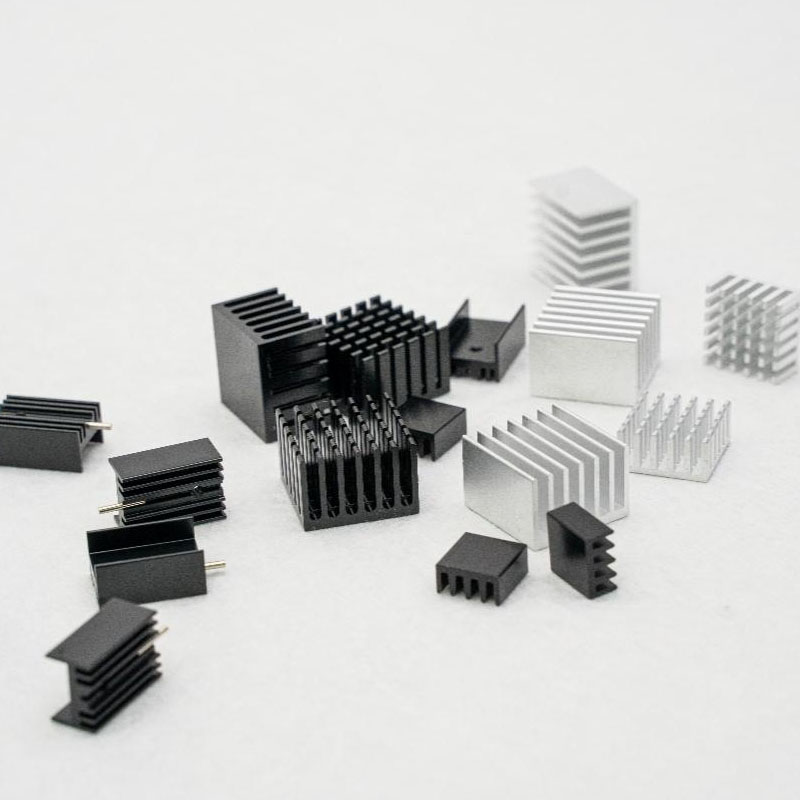
Engineers specify extruded aluminum because it solves multiple mechanical and environmental problems simultaneously. The material properties of aluminum combined with the geometric freedom of extrusion create a highly versatile manufacturing solution.
Aluminum offers structural integrity comparable to steel but at a third of the weight. This exceptional strength-to-weight ratio maximizes payload capacity in transportation and improves energy efficiency across various industrial applications. Heavy machinery, automotive frames, and aerospace components rely heavily on this characteristic to meet strict weight targets without sacrificing load-bearing capacity.
Aluminum naturally forms a microscopic, protective oxide layer when exposed to oxygen. This self-healing layer provides excellent corrosion resistance, protecting structural components even in harsh or corrosive environments without the need for additional coatings. If the surface is scratched, the oxide layer instantly reforms, preventing rust from compromising the structural integrity of the part.
Extruded aluminum is highly conductive, making it the premier choice for heat sinks, busbars, and power transmission components. It efficiently dissipates heat and conducts electricity, outperforming many heavier alternatives. The extrusion process allows for the creation of complex fin geometries that maximize surface area for thermal dissipation.
Aluminum is infinitely recyclable. The recycling process retains all metallurgical properties while requiring 95% less energy than primary aluminum production. This provides significant environmental and cost benefits, supporting a sustainable circular economy. Scrap from the extrusion process is routinely melted down and recast into new billets.
The extrusion process provides immense design flexibility. Engineers can design profiles that place material exactly where structural loads demand, eliminating unnecessary weight and integrating multiple functions into a single part. Screw bosses, snap-fit joints, and interlocking hinges can be extruded directly into the profile, reducing assembly time and part counts.
Property | Aluminum (6061-T6) | Mild Steel (A36) | Advantage |
|---|---|---|---|
Density (g/cm³) | 2.70 | 7.85 | Aluminum is roughly 1/3 the weight of steel. |
Yield Strength (MPa) | 276 | 250 | Comparable strength, superior strength-to-weight ratio. |
Thermal Conductivity (W/m·K) | 167 | 50 | Aluminum dissipates heat over 3x faster. |
Corrosion Resistance | High (Self-passivating) | Low (Requires coating) | Aluminum survives harsh environments untreated. |
Designing for extrusion requires a solid grasp of metal flow dynamics. Poorly designed profiles will cause uneven die wear, slow press speeds, and high scrap rates. Adhering to Design for Manufacturability (DFM) principles ensures the profile can be produced efficiently and accurately.
Profiles are categorized as solid, semi-hollow, or hollow. Solid profiles are the simplest and most cost-effective to produce. Hollow profiles require complex porthole dies, which increase tooling costs but significantly reduce material weight and allow for internal channels. Semi-hollow profiles have partially enclosed voids with high tongue ratios, which can put immense stress on the die tooling during extrusion.
Minimum wall thickness depends heavily on the chosen alloy and profile size. When designing, avoid abrupt transitions between thick and thin walls. Uneven wall thicknesses lead to uneven cooling, which can cause sink marks, warping, and dimensional instability. A general rule is to keep wall thickness variations within a 2:1 ratio. If a thick wall meets a thin wall, use a generous radius to ease the transition and promote uniform metal flow.
The Circumscribing Circle Size (CCD) is the smallest circle that completely encloses the profile's cross-section. The CCD dictates the required press size. Designing profiles that exceed standard 8-inch or 10-inch press capacities will limit your supplier options and increase production costs. A larger CCD requires a larger billet and a press with higher tonnage to push the metal through the die.
Standard industry tolerances apply to most extrusions, but precision tolerances can be achieved with careful die design and process control. Profile design also impacts the visibility of extrusion lines, which dictates the level of preparation required for secondary finishing like anodizing. Large flat surfaces are prone to showing minor die lines; adding slight crowns or serrations can mask these imperfections.
Keep wall thicknesses as uniform as possible to prevent warping during the quench phase.
Use standard radii (minimum 0.015 inches) on all sharp corners to prevent die breakage.
Limit deep, narrow channels (high tongue ratios) to reduce the risk of tool failure.
Design symmetrical profiles when possible to ensure balanced metal flow through the die.
Selecting the right manufacturing method requires comparing material waste, tooling costs, and production speed. Extrusion excels in specific applications but must be evaluated against machining, casting, and forming.
Extrusion boasts a superior buy-to-fly ratio, meaning less material is wasted compared to machining a part from a solid block. Extrusion is the superior choice for continuous cross-sections and high volumes. However, CNC machining remains necessary for creating complex 3D geometries that cannot be extruded. Often, extrusion is used to create a near-net shape, which is then lightly CNC machined to add specific features like cross-holes or pockets, combining the efficiency of extrusion with the precision of machining.
Die casting requires expensive steel molds and longer lead times. Extrusion tooling is significantly cheaper and faster to produce. Furthermore, extrusion avoids the internal porosity issues common in die casting, resulting in parts that are substantially stronger under tensile load. Die casting is better suited for complex, non-linear 3D shapes, while extrusion dominates linear structural components.
Roll forming is highly efficient for uniform, thin-walled shapes but requires high setup costs and massive production volumes to justify the tooling. Extrusion is vastly preferable for complex, multi-chambered profiles. It allows for varying wall thicknesses and intricate internal features that roll forming simply cannot achieve. Roll forming is limited to bending sheet metal, whereas extrusion pushes solid metal into entirely new cross-sections.
Manufacturing Method | Tooling Cost | Lead Time | Geometric Capability | Material Waste |
|---|---|---|---|---|
Aluminum Extrusion | Low ($500 - $3,000) | 3 - 6 Weeks | Complex 2D cross-sections, internal voids | Low |
CNC Machining | None (Fixturing only) | 1 - 3 Weeks | Complex 3D geometries | High |
Die Casting | High ($10,000+) | 8 - 12 Weeks | Complex 3D shapes, thin walls | Low |
Roll Forming | Medium to High | 6 - 10 Weeks | Simple, uniform thin-walled profiles | Low |
The alloy you specify dictates the press speed, the die life, and the final mechanical properties of the part. Not all aluminum alloys can be extruded efficiently.
The 6000 series alloys are the workhorses of the extrusion industry. Alloy 6063 offers a superior surface finish and high extrudability, making it ideal for architectural use and heat sinks. Alloy 6061 provides higher yield strength for structural applications, though it extrudes slower and wears dies faster. Alloy 6005A serves as a versatile middle-ground alternative, offering better extrudability than 6061 with comparable strength.
Hard alloys are typically reserved for aerospace and defense applications requiring extreme strength. However, these alloys present manufacturing realities: they require much higher press tonnage, slower extrusion speeds, and cause faster die wear, which significantly increases unit costs. Alloys like 7075 cannot be extruded into complex hollow shapes due to the immense pressure required, limiting them to simpler solid profiles.
Your extrusion partner must have the right equipment and quality control systems in place. A mismatch between your profile design and the supplier's press capabilities will result in dimensional failures and production delays.
Evaluate a manufacturer based on their press sizes, tonnage range, and billet diameter capabilities. Ensure their equipment aligns with your project's CCD requirements. A 10-inch profile cannot be pushed on a 7-inch press. Verify that the supplier has the appropriate tonnage to push your specific alloy through the required die geometry.
Partnering with extruders who design and cut their own dies offers distinct advantages. In-house tooling enables faster iteration cycles, tighter quality control over the die profile, and reduced intellectual property risk compared to outsourcing die creation. When a die needs correction (die trial), an in-house tool shop can make adjustments in hours rather than days.
Verify that the supplier maintains necessary certifications like ISO 9001 or AS9100. Robust testing protocols are essential for high-reliability applications. Look for spectrometry for alloy composition, tensile testing for mechanical properties, and coordinate measuring machines (CMM) for dimensional accuracy. Ask to see their quality control plans and first article inspection (FAI) reports.
Select a vendor capable of handling secondary operations in-house. Capabilities like CNC routing, anodizing, powder coating, and thermal management integration eliminate multi-vendor supply chain delays and reduce overall logistical friction. Moving raw extrusions to a separate machine shop and then to a separate anodizer introduces massive shipping costs and quality control blind spots.
To successfully implement extruded components into your product line, you must align your engineering designs with the physical realities of the extrusion press. Follow these next steps to move your project from concept to production:
Finalize your CAD models and calculate the exact Circumscribing Circle Size (CCD) to determine press requirements.
Review all wall thicknesses and corner radii to ensure compliance with standard extrusion DFM guidelines.
Draft a comprehensive Request for Quote (RFQ) detailing annual volume projections, specific alloy and temper requirements, and required secondary operations.
Audit potential suppliers based on their in-house tooling capabilities and press tonnage alignment.
A: Tooling costs are relatively low, typically ranging from $500 to $3,000. The exact price depends on the profile's complexity, size, and whether it is a solid or hollow shape requiring a porthole die.
A: Minimum wall thickness depends on the alloy and profile size. For standard 6063 profiles, it generally ranges from 0.040" to 0.060". Harder alloys require thicker minimum walls to extrude successfully.
A: The standard lead time for custom die creation and initial sample runs is typically 3 to 6 weeks, depending on the supplier's current backlog and the complexity of the die design.
A: T5 temper means the profile is cooled from the extrusion temperature and then artificially aged in an oven. T6 temper involves a more rigorous solution heat treatment, rapid quenching, and artificial aging to achieve maximum strength.
A: Yes, particularly the 6000 series alloys. However, welding causes a localized loss of temper and strength in the heat-affected zone, which must be accounted for in the structural design.
A: Surface defects are commonly caused by die wear, improper billet temperature, excessive extrusion speed, or impurities within the aluminum billet itself. Strict process control is required to maintain surface quality.


