Views: 0 Author: Site Editor Publish Time: 2025-10-28 Origin: Site
Ever wondered how doors in high-security areas remain securely locked without physical keys? Enter maglocks—an electromagnetic solution revolutionizing security systems. Maglocks, comprising an electromagnet and armature plate, offer unparalleled reliability and strength. In this post, you'll learn what maglocks are, their components, and why they're essential in modern security systems.
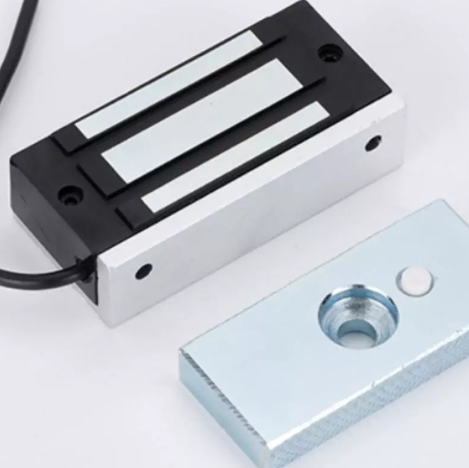
A maglock mainly consists of two parts: an electromagnet and an armature plate. The electromagnet mounts onto the door frame, while the armature plate attaches to the door itself. When powered, the electromagnet generates a magnetic field that attracts the armature plate, holding the door securely closed. This design has no moving parts, which reduces wear and tear, making it highly reliable over time.
Maglocks operate on the principle of electromagnetism. When electricity flows through the electromagnet, it creates a magnetic force that pulls the armature plate toward it, locking the door. This force can be very strong, often measured in hundreds or thousands of pounds, depending on the model. The lock requires continuous power to stay engaged. If power is cut, the magnetic field collapses, and the door unlocks automatically—this is known as a fail-safe design, ensuring safe exit during emergencies.
There are several types of maglocks, each suited to different applications:
Face-to-Face (Surface-Mounted) Maglocks: The most common type, where the electromagnet and armature plate are mounted on the door and frame surfaces. They are easy to install and cost-effective but can be bulky.
Morticed Maglocks: These are recessed into the door and frame, offering a cleaner look and better tamper resistance. However, installation is more complex and usually requires precise cutting.
Shear Maglocks: These locks engage by sliding the armature plate into the electromagnet, providing both vertical and horizontal holding forces. They offer a flush finish and high security but need exact alignment during installation.
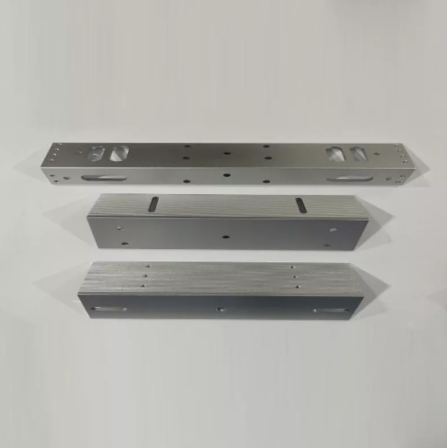
Specialty Maglocks: Designed for unique situations like double doors, glass doors, gates, or hazardous locations. They often include specific mounting brackets or sealed designs for outdoor or industrial use.
Each type has its benefits and challenges. For example, residual magnetism can cause the door to stick slightly after power cuts. Some advanced models include push-off mechanisms to counter this issue, ensuring smooth release every time.
Maglocks provide a strong level of security. They use an electromagnetic force to hold doors tightly closed, often with holding forces ranging from 600 to over 3000 pounds. This strength makes them difficult to force open compared to traditional locks. Because maglocks have no moving parts, they are less vulnerable to mechanical failure or picking. Many models also come with tamper-resistant features, such as sealed housings and anti-corrosion coatings, which help protect against vandalism and environmental damage.
Additionally, maglocks integrate easily with electronic access control systems. This means you can restrict entry to authorized users only, using cards, biometrics, or keypads. The ability to monitor and control access remotely adds an extra layer of security. For example, you can track who enters and exits, enhancing accountability in sensitive or high-security areas like data centers, government buildings, or hospitals.
Maglocks are convenient because they allow for quick, keyless entry. Users simply present credentials, and the lock disengages instantly. This is especially useful in busy commercial environments where many people need access throughout the day. Since maglocks don’t rely on physical keys, there’s no risk of lost keys or the need to change locks when keys go missing.They are also cost-effective over time. Maglocks require less maintenance than mechanical locks because they have fewer parts that wear out. Installation is generally simpler than more complex locking systems, reducing upfront labor costs. Plus, their compatibility with access control systems means you can manage multiple doors from a central system, streamlining security management and reducing operational costs.
Maglocks are built to last. The lack of moving parts means there’s less wear and tear, resulting in fewer breakdowns and longer service life. Many maglocks are designed to withstand harsh environments, including outdoor settings with exposure to weather, dust, or moisture. Some models feature fully sealed components to prevent corrosion and electrical failures.Their fail-safe design also enhances reliability. In a power outage, maglocks automatically release, allowing free exit. This is critical for safety compliance in emergency situations, such as fires or evacuations. For businesses, this means peace of mind knowing that security won’t compromise occupant safety.
Maglocks are widely used in commercial and industrial environments due to their strong security and ease of integration with access control systems. Offices, warehouses, and factories often use maglocks on entry doors, server rooms, and restricted areas. These locks help control who enters sensitive zones, ensuring only authorized personnel gain access. For example, in a manufacturing plant, maglocks can secure areas containing expensive machinery or hazardous materials.In retail stores, maglocks secure stock rooms and cash offices. Their quick release feature allows employees to exit safely during emergencies, while still preventing unauthorized entry. Because maglocks require continuous power, they are often connected to backup power sources to maintain security even during power outages.
High-security facilities such as government buildings, data centers, and research labs benefit greatly from maglocks. These locks offer holding forces ranging from 1,200 to over 3,000 pounds, making it difficult to force doors open. Maglocks are ideal for protecting sensitive information and valuable assets.In data centers, maglocks integrate with biometric readers or card access systems, allowing precise control over who can enter server rooms. Government facilities use maglocks to secure restricted offices and vaults, enhancing protection against unauthorized access. They also provide audit trails by logging entry and exit events, which helps with security monitoring and compliance.Hospitals and correctional facilities use maglocks to secure emergency exits and controlled areas. The fail-safe design ensures doors unlock during power failures or fire alarms, allowing safe evacuation.
Maglocks play a critical role in emergency preparedness. Their fail-safe design means the lock releases automatically if power is lost or a fire alarm is triggered. This feature is essential for emergency exits, enabling occupants to leave quickly and safely.Hospitals, schools, and public buildings often install maglocks on emergency doors. These locks provide security during normal use but ensure quick egress during crises. For example, a hospital may secure operating rooms or medication storage with maglocks, but the doors will open immediately if an alarm sounds.In prisons, maglocks help maintain strict control over inmate movement while allowing rapid door release during emergencies. They also support delayed egress systems that slow down exit attempts in non-emergency situations, alerting security personnel if needed.
Installing a maglock often requires compliance with local building codes and regulations. Many municipalities mandate permits for maglock installation due to safety concerns, especially fire safety. One common requirement is integrating the maglock with the building’s fire alarm system to ensure the lock releases automatically during emergencies. This integration guarantees safe egress in case of fire or power failure.Permit processes vary widely. Some cities require detailed electrical plans, inspections, and proof of compliance with fire safety codes. For example, in Toronto, you must follow a specific permit process to install maglocks legally. It’s crucial to research local regulations before installation to avoid costly delays or fines. Consulting a licensed professional can help navigate these requirements smoothly.
Maglocks depend on a constant power supply to remain locked. They typically operate on low voltage, such as 12V DC or 24V AC, which must be supplied reliably. The power source usually connects to the building’s main electrical system and should have its own dedicated circuit breaker to prevent interference or overload.Because maglocks release when power is cut, it’s common to connect them to an uninterruptible power supply (UPS) or backup generator. This ensures security remains intact during power outages. Proper wiring and power management are essential to avoid lock failures. Using a fused and regulated power supply can protect the maglock from electrical surges and extend its lifespan.
Safety codes often require maglocks to unlock automatically when a fire alarm triggers. This fail-safe feature allows occupants to exit quickly in emergencies. Integration involves wiring the maglock control system to the fire alarm panel, so when the alarm activates, power to the maglock cuts off immediately.This integration must be done carefully to meet code requirements and ensure reliable operation. Improper setup can cause the lock to fail to release, creating a serious safety hazard. Regular testing and maintenance are necessary to verify that the maglock responds correctly during fire alarm events.
One common challenge with maglocks is residual magnetism. After power cuts, the electromagnet stops generating a magnetic field, but a small magnetic force can remain in the armature plate. This leftover magnetism may cause the door to stick slightly, delaying its release. In high-traffic or emergency exit doors, this delay can cause frustration or even safety concerns. Some advanced maglock models include a push-off mechanism that physically separates the armature plate from the electromagnet once power is cut, ensuring smooth and immediate door release.
Maglocks are inherently fail-safe, meaning they unlock automatically when power is lost. This design prioritizes safety, allowing quick egress during emergencies like fires or power outages. However, this fail-safe nature also means maglocks cannot provide fail-secure locking, which remains locked without power. For areas where maintaining lock during power failure is critical, maglocks may not be suitable. Instead, fail-secure locks like electric strikes might be preferred. This limitation requires careful planning when selecting maglocks for specific applications, balancing safety and security needs.
While maglocks themselves are relatively affordable, their installation can be costly and complex. Many local building codes require permits and integration with fire alarm systems to ensure automatic unlocking during emergencies. This process often involves electrical engineering plans, inspections, and additional hardware such as emergency release stations and backup power supplies. These requirements increase the total cost significantly—sometimes by thousands of dollars per door. For multiple doors, costs may be slightly lower per unit but still substantial. Additionally, ongoing maintenance and testing to ensure compliance add to operational expenses.
Maglocks and electric strikes are both popular choices for electronic access control, but they work quite differently. Maglocks use an electromagnetic force to hold the door closed. They require continuous power to stay locked and automatically release when power is cut, making them fail-safe. This feature ensures safe exit during emergencies but means the door unlocks if power fails.
Electric strikes, on the other hand, replace the standard strike plate on a door frame. They work by releasing the latch bolt electronically, allowing the door to open without turning the handle. Unlike maglocks, electric strikes can be fail-safe or fail-secure. Fail-secure electric strikes stay locked when power is lost, which is useful for high-security areas where maintaining lock during power outages is critical.
Here are some key differences:
Security: Maglocks typically offer higher holding force (up to 3000 pounds) compared to electric strikes, which depend on the door's latch mechanism strength.
Power Dependency: Maglocks need constant power to stay locked; electric strikes can be configured to lock or unlock on power loss.
Installation: Maglocks are surface-mounted or mortised, generally easier to retrofit; electric strikes require modification of the door frame.
Emergency Egress: Maglocks release automatically on power loss, which is great for emergency exits; electric strikes may need additional hardware to ensure safe egress.
Choosing between them depends on your security needs, door type, and safety requirements. For example, maglocks are ideal for doors where fail-safe release is mandatory, such as emergency exits. Electric strikes suit doors requiring fail-secure locking, like server rooms or restricted offices.
Traditional mechanical locks use physical keys or combinations to secure doors. They rely on mechanical components like pins, tumblers, or levers. In contrast, maglocks use electromagnetic force, eliminating moving parts.
Advantages of maglocks over traditional locks include:
Keyless Access: Maglocks integrate with electronic access control systems, allowing entry via cards, biometrics, or codes, reducing lost key issues.
Higher Holding Force: Maglocks can resist much greater force than many mechanical locks.
Durability: Fewer moving parts mean less wear and tear, leading to longer service life.
Remote Control and Monitoring: Maglocks can be controlled and monitored remotely, providing audit trails and instant lock/unlock capabilities.
However, traditional locks have benefits too:
No Power Needed: They operate without electricity, so no concerns about power outages.
Lower Cost: Generally cheaper to install and maintain.
Simplicity: Easy to use and repair without specialized skills.
In many cases, combining both systems enhances security and convenience. For example, a mechanical lock can serve as a backup to a maglock, ensuring security even during power failures.
Maglocks are secure, durable, and integrate well with electronic access systems. They offer high holding force and are suitable for various applications, including commercial, industrial, and high-security areas. Their fail-safe design ensures safety during emergencies, while their keyless access provides convenience. When deciding to use a maglock, consider door material, security needs, and installation complexity. Yunci Technology offers advanced maglock solutions that enhance security and convenience, providing exceptional value for businesses seeking reliable access control.
A: A maglock is an electromagnetic locking device used to secure doors by generating a magnetic field to hold an armature plate, keeping the door closed.
A: A maglock functions through electromagnetism; it generates a magnetic force when powered, locking the door by attracting the armature plate.
A: Maglocks offer keyless access, higher holding force, and durability due to fewer moving parts, making them more reliable and secure.
A: Maglocks are fail-safe, releasing automatically during power outages or fire alarms, ensuring safe and quick egress in emergencies.


