Views: 0 Author: Site Editor Publish Time: 2026-07-10 Origin: Site
Manufacturing complex, tight-tolerance components presents a persistent engineering challenge. You must balance strict geometric requirements without exponentially increasing production costs or extending lead times. Traditional manufacturing methods often fall short when producing high-volume parts. CNC machining offers exceptional precision but scales poorly in cost and time. Casting scales well for high volumes but often sacrifices dimensional accuracy, surface finish, and structural density. Engineers need a reliable alternative that bridges this gap effectively.
Aluminum Extrusion serves as the optimal middle ground. It allows engineers to produce near-net-shape components that meet strict geometric tolerances. This approach significantly reduces the need for secondary operations. By pushing heated aluminum alloys through custom steel dies, manufacturers create continuous linear profiles. This method delivers both the precision required for critical assemblies and the scalability needed for volume production.
Near-Net Shape Efficiency: Extruding parts to exact cross-sectional specifications drastically reduces or eliminates costly secondary CNC machining operations.
Unmatched Design Versatility: Custom dies allow for the creation of intricate, multi-cavity hollows and integrated assembly features that are impossible to machine from solid billet.
Superior Economics: Tooling and die costs for extrusion are a fraction of those required for die casting or plastic injection molding, accelerating ROI.
Optimized Material Properties: The extrusion process aligns the grain structure of aluminum, yielding consistent mechanical properties, high strength-to-weight ratios, and excellent machinability for final finishing.
Sustainable & Corrosion-Resistant Lifecycle: Aluminum's ease of recycling and natural oxide layer eliminate the need for protective primers, providing an environmentally conscious, long-lasting alternative to heavy steel components.
Precision in extruded components establishes the baseline for project success. Standard extrusions handle basic structural needs, but precision applications demand much tighter controls. Precision tolerances often reach +/- 0.005 inches or tighter, depending on the profile size and complexity. Wall thickness consistency and strict concentricity standards remain critical for aerospace, automotive, and medical applications. Achieving these tight tolerances ensures seamless integration into complex assemblies. Engineers rely on these strict dimensional controls to prevent stack-up errors during final production. When you design a mating part, the extrusion must hold its shape across the entire length of the run. Variations in wall thickness can lead to weak points or assembly failures down the line.
To achieve this level of precision, manufacturers monitor several variables during the push. Billet temperature, ram speed, and die temperature all play a role in the final dimensions. If the metal flows too quickly, it can tear or warp. If it flows too slowly, the profile may not fill out the die completely. Precision extrusion requires a tightly controlled environment where these variables are constantly adjusted. This level of control separates standard structural aluminum from aerospace-grade components.
Subtractive manufacturing methods like CNC machining generate significant material waste. Machining parts from solid billet requires long cycle times and heavy tool wear. The continuous, low-waste output of extrusion offers a stark contrast. You only use the material necessary for the final profile shape. This near-net-shape capability reduces scrap rates dramatically. Production cycles accelerate because the primary shape forms instantly as the metal exits the die. You bypass hours of roughing passes required in traditional subtractive workflows.
Consider a complex heat sink with deep, thin fins. Machining this from a solid block requires specialized tooling, multiple setups, and hours of machine time. The tool must clear chips from deep grooves, increasing the risk of tool breakage. Extruding that same heat sink profile takes seconds per foot. The fins form perfectly as the metal flows through the die. You only need to cut the extrusion to length and perhaps machine a flat mounting surface. The efficiency gains are massive when scaling up production.
The intense compressive forces of the extrusion process refine the grain structure of the aluminum. This metallurgical uniformity prevents internal voids, which remain a common defect in cast components. A refined grain structure enhances the overall mechanical strength of the profile. It also significantly improves machinability during any post-extrusion CNC operations. When you cut or tap an extruded profile, the material behaves predictably. Tool wear decreases, and surface finishes improve during secondary operations.
Castings often suffer from porosity. Gas gets trapped in the molten metal as it cools, creating weak spots. If you machine into a porous area, you ruin the part. Extrusion forces solid, heated aluminum through a die under thousands of tons of pressure. This consolidates the metal, ensuring a dense, uniform structure. When your CNC mill cuts a pocket into an extruded profile, the cutter engages solid metal every time. This consistency allows for faster feed rates and longer tool life.
Engineers consistently prefer aluminum over steel for precision assemblies requiring high structural efficiency. Aluminum offers high durability while delivering exceptional lightweighting capabilities. It eliminates the need for rust-inhibiting primers due to its natural oxide layer. Steel requires continuous maintenance and heavy coatings to prevent corrosion. Aluminum profiles reduce the overall weight of the assembly, which proves critical in transportation and aerospace sectors. You achieve the necessary strength without the severe weight penalty of steel components.
When designing structural frames, the strength-to-weight ratio dictates material choice. Steel is stronger by volume, but aluminum is roughly one-third the weight. By designing an extruded profile with thicker walls in high-stress areas and thinner walls elsewhere, you can match the strength of a steel component while saving significant weight. This targeted material distribution is difficult and expensive to achieve with steel fabrication.
Designing a profile to its near-net shape slashes per-part costs. You capture the complex cross-section directly from the die. This means only cutting to length and minor localized machining are required. You might only need to tap holes or mill specific pockets. Precision Aluminum Profiles eliminate the need to machine the entire exterior geometry. Reducing machine time directly lowers labor and operational expenses. Parts move from raw material to final assembly much faster.
Every minute a part spends in a CNC machine adds cost. By extruding the primary shape, you reserve machining only for features that cannot be extruded, like cross-holes or precise mating pockets. This strategy maximizes the throughput of your machine shop. You can produce more finished assemblies with the same number of CNC mills.
The upfront capital expenditure for extrusion dies remains remarkably low. Custom dies typically cost a fraction of what you would spend on high-pressure die casting molds or plastic injection molds. This low tooling cost lowers the barrier to entry for custom profiles. You can prototype and iterate designs without risking massive capital. Rapid ROI becomes achievable even on lower-volume production runs. Tooling modifications also remain relatively inexpensive compared to hard tooling for casting.
If a design changes, cutting a new extrusion die takes weeks, not months. You can test a profile, identify areas for improvement, and order a revised die quickly. This agility allows engineering teams to refine their designs based on real-world testing without blowing the project budget on tooling revisions.
The engineering of the extrusion die directly determines the dimensional accuracy of the final profile. Die bearing lengths, pocket designs, and mandrel supports control the metal flow. Proper die design ensures uniform velocity across the entire cross-section. This uniform flow prevents warping and maintains strict tolerances. Surface quality also depends heavily on the polish and maintenance of the die bearing surfaces. Expert die makers adjust these parameters to balance extrudability with geometric precision.
Metal flows faster through the thicker sections of a die and slower through the thinner sections. If left uncorrected, this uneven flow causes the profile to twist or bow as it exits the press. Die makers use bearing lengths to choke the flow in thicker areas, ensuring the metal exits the die at a uniform speed. This intricate balancing act requires deep metallurgical knowledge and precise machining of the die itself.
Sourcing a near-finished profile from a single vendor provides a major logistical advantage. Lightweight profiles reduce freight costs significantly. You simplify inventory management by stocking one custom profile instead of multiple standard shapes and raw billets. This consolidation minimizes hand-offs between raw material suppliers, machine shops, and finishing facilities. A streamlined supply chain reduces lead times and lowers the risk of transit damage. You maintain better control over final part quality and delivery schedules.
Managing multiple vendors increases the risk of delays and quality issues. If the raw material supplier is late, the machine shop sits idle. By partnering with a vendor who handles extrusion, cutting, and finishing, you eliminate these bottlenecks. You issue one purchase order and receive a finished, ready-to-assemble component.
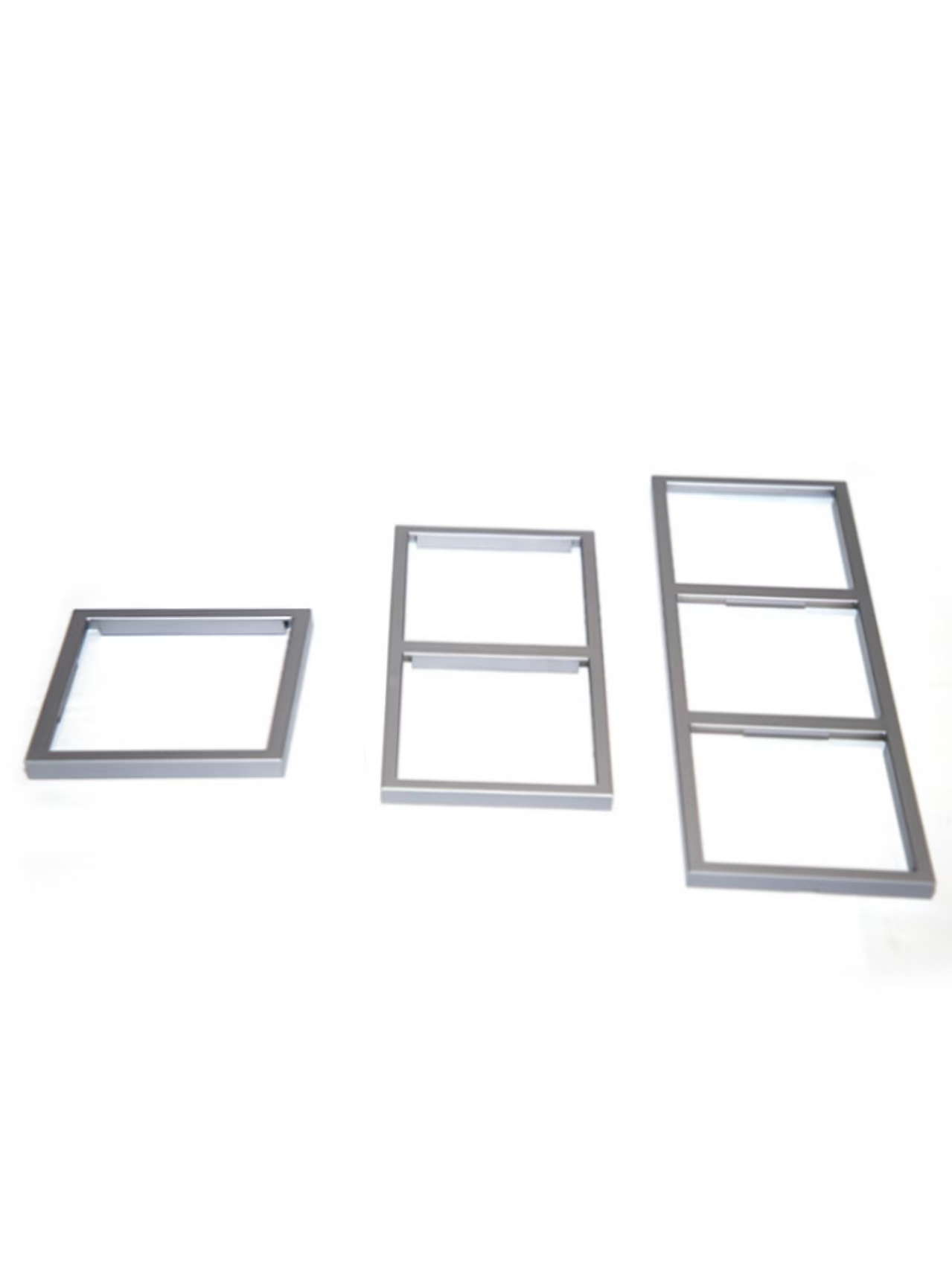
The 6000-series alloys serve as the industry standard for precision parts. Alloys like 6061 and 6063 balance extrudability, yield strength, and corrosion resistance perfectly. They accept complex die shapes without excessive tearing or tool wear. Once extruded, these alloys respond well to artificial aging (heat treatment) to maximize their mechanical properties. 6061 offers higher strength for structural components. 6063 provides superior surface finish and extrudability for intricate architectural or heat sink profiles.
Magnesium and silicon are the primary alloying elements in the 6000 series. These elements form magnesium silicide, which precipitates during heat treatment to strengthen the metal. The exact ratio of these elements determines the alloy's specific properties. Engineers must select the right alloy based on the part's functional requirements. A structural frame needs the strength of 6061, while a decorative trim piece benefits from the smooth finish of 6063.
High-tech applications demand excellent thermal and electrical conductivity. Heat sinks, EV battery enclosures, and LED housings rely on aluminum's natural thermal management properties. The material pulls heat away from sensitive electronic components efficiently. Extrusion allows you to design custom fin profiles that maximize surface area for cooling. You achieve superior thermal dissipation compared to stamped or cast alternatives. Electrical enclosures also benefit from the material's inherent shielding capabilities.
In power electronics, managing heat is critical to component lifespan. Extruded aluminum heat sinks offer a continuous thermal path from the heat source to the cooling fins. There are no joints or welds to impede heat transfer. By optimizing the fin geometry through extrusion, you can maximize convective cooling in a compact footprint.
The extrusion process yields a smooth surface finish that naturally resists oxidation. Aluminum forms a microscopic oxide layer instantly upon exposure to air. This layer protects the underlying metal from further corrosion. You eliminate the extensive priming, painting, or rust-prevention coatings required for steel parts. If enhanced protection or aesthetics are needed, extruded profiles accept anodizing and powder coating exceptionally well. These surface treatments bond deeply with the substrate, ensuring long-lasting durability.
Anodizing thickens the natural oxide layer, creating a hard, scratch-resistant surface. This process also allows for dyeing the metal, providing aesthetic options without the risk of paint flaking or peeling. For outdoor applications, this inherent corrosion resistance ensures the component will survive harsh environments without degrading.
Aluminum extrusion strongly supports environmental sustainability initiatives. The ease of recycling extrusion scrap without loss of mechanical properties is a major advantage. You can melt down and re-extrude aluminum indefinitely. This appeals to environmentally conscious industries aiming to lower their Scope 3 emissions. Using recycled aluminum requires only a fraction of the energy needed to produce primary aluminum from bauxite ore. Sustainable material sourcing improves the overall environmental footprint of your manufactured products.
Scrap generated during the extrusion process, such as the ends of the billets, goes straight back into the melting furnace. This closed-loop recycling minimizes waste and reduces raw material costs. When the final product reaches the end of its lifecycle, the aluminum components can be easily separated and recycled again.
Extrusion allows you to create complex internal geometries within a single solid profile. You can design multi-cavity hollows for cooling channels or wire routing conduits. These internal features form simultaneously with the exterior shape. Machining such deep, complex internal cavities from solid billet is often impossible or prohibitively expensive. Hollow dies use a mandrel suspended within the die cavity to shape the internal voids. This capability opens up entirely new design possibilities for fluid routing and structural reinforcement.
Designing a hollow profile requires a specialized die known as a porthole die. The metal separates as it flows around the mandrel supports and then welds back together under immense pressure before exiting the die. This solid-state weld is as strong as the parent material. You can create intricate internal webs that add immense torsional rigidity to the profile without adding significant weight.
Engineers can design assembly features directly into the cross-section. You can integrate snap-fits, screw bosses, hinge joints, and T-slots into the initial profile. This eliminates the need for welded assemblies or additional mounting hardware. Parts snap or slide together seamlessly on the assembly line. Reducing the total part count simplifies the bill of materials. It also drastically reduces manual assembly time and potential failure points associated with mechanical fasteners.
Consider a modular framing system. By extruding T-slots into the profile, you allow for infinite adjustability during assembly. Components can be bolted anywhere along the length of the extrusion. This flexibility is impossible with welded frames. Integrating screw bosses allows you to attach end caps or circuit boards directly to the extrusion with self-tapping screws, eliminating the need for drilling and tapping operations.
Strategic placement of material optimizes the strength-to-weight ratio. You design thicker walls only where stress concentrates. Non-critical areas receive thinner walls to reduce overall weight. This targeted material distribution is unique to the extrusion process. You cannot easily replicate this efficiency with standard structural shapes or sheet metal bending. The resulting profiles deliver maximum rigidity exactly where required while shedding unnecessary mass.
Finite Element Analysis (FEA) helps engineers identify high-stress areas in a design. You can then modify the extrusion profile to add material exactly where the FEA indicates it is needed. This iterative design process results in highly optimized components that perform better and cost less than traditional alternatives.
Comparison of Manufacturing Methods for Precision Parts | ||||
Manufacturing Method | Tooling Cost | Material Waste | Design Complexity | Scalability |
|---|---|---|---|---|
Aluminum Extrusion | Low | Low | High (Continuous Profiles) | Excellent |
CNC Machining | None | High | High (Any Geometry) | Poor |
Die Casting | High | Low | Moderate (Requires Draft Angles) | Excellent |
You must maintain a realistic assessment of when extrusion isn't enough. While precision profiles hold tight tolerances, they cannot replace all machining. Ultra-tight tolerances, such as bearing fits or precise mating surfaces, will still require post-extrusion CNC machining. Extrusion tolerances apply to the entire length of the profile and can vary slightly due to thermal expansion and cooling rates. Identify critical dimensions early and plan for secondary machining only where absolutely necessary.
Standard extrusion tolerances are defined by industry organizations, but precision extruders can hold much tighter limits. However, pushing the limits of extrusion tolerances increases scrap rates and drives up costs. It is often more economical to extrude a part slightly oversized and machine the critical features to exact dimensions.
Die degradation occurs over high-volume production runs. As the metal flows over the steel die bearings, friction causes microscopic wear. This wear impacts dimensional accuracy over time. You must mitigate this risk by working with vendors who have robust die maintenance protocols. Regular polishing, nitriding, and scheduled die replacement ensure profile consistency. A proactive tooling maintenance program prevents out-of-tolerance parts from reaching your assembly line.
Nitriding hardens the surface of the steel die, significantly extending its lifespan. However, even nitrided dies eventually wear. A quality extrusion partner monitors the dimensions of the extruded profiles constantly. When a dimension approaches the tolerance limit, they pull the die for maintenance or replacement before bad parts are produced.
An inverse relationship exists between an alloy's mechanical strength and its extrudability. 7000-series aluminum is incredibly strong, often used in aerospace. However, it is difficult to extrude into complex precision shapes. It increases tooling wear, raises production costs, and leads to higher defect rates. 6000-series alloys offer the best balance. You must weigh the structural requirements of your part against the manufacturability of the chosen alloy to ensure project success.
Pushing a hard alloy like 7075 through a complex die requires immense pressure and slow ram speeds. The risk of the die breaking or the profile tearing is high. If your design requires intricate features, you must use a more extrudable alloy like 6063. If strength is paramount, you must simplify the profile geometry to accommodate a harder alloy.
Verifying a vendor's certifications ensures repeatable precision. Look for ISO 9001, AS9100, or IATF 16949 certifications depending on your industry requirements. These quality management systems dictate strict process controls. They guarantee that the vendor monitors die wear, billet temperatures, and quench rates meticulously. Certified partners maintain detailed documentation and traceability for every batch of extruded material. This transparency is crucial for high-reliability applications.
A certified quality system means the vendor has documented procedures for every step of the manufacturing process. If a defect occurs, they can trace it back to the specific billet and extrusion run. This traceability allows for rapid root cause analysis and corrective action, preventing future issues.
Vendors with in-house die correction and manufacturing capabilities offer distinct advantages. They provide faster design iterations and tighter quality control. When a die needs adjustment, an in-house team can perform corrections immediately. Outsourcing die work adds weeks to lead times and complicates communication. In-house tooling experts understand the specific nuances of their extrusion presses, leading to longer tool lifespans and better initial die designs.
Die correction is an art. It requires a deep understanding of how metal flows under pressure. An in-house die corrector can watch a profile exit the press, identify a flow issue, and modify the die bearings to fix it. This immediate feedback loop is impossible when the die manufacturer is located off-site.
Select a partner capable of handling the entire component lifecycle. A vendor who only extrudes raw profiles leaves you managing multiple subcontractors. Look for partners offering precision cutting, CNC finishing, and surface treatments like anodizing or powder coating. Single-source providers take full responsibility for the final part quality. This comprehensive approach reduces logistical headaches and ensures that the final component meets all your specifications perfectly.
When one vendor handles the entire process, there is no finger-pointing if a part fails inspection. The extruder cannot blame the machine shop, and the machine shop cannot blame the anodizer. The single-source provider owns the quality from start to finish.
Identify high-cost CNC machined parts in your current assemblies that feature consistent linear cross-sections.
Consolidate multi-part welded assemblies into single extruded profiles to reduce hardware and labor costs.
Engage in a Design for Manufacturability (DFM) review with an extrusion specialist to optimize your CAD models.
Request tooling estimates and lead times for prototype dies to validate the extrusion process for your application.
A: Standard precision tolerances generally range from +/- 0.005 to +/- 0.010 inches, depending on the profile's size and complexity. Extremely critical dimensions may require secondary CNC machining to achieve tighter controls like bearing fits.
A: Extrusion produces long, continuous profiles with very little material waste and low per-part costs at high volumes. CNC machining can achieve tighter tolerances on complex 3D geometries but generates significant waste and costs much more per part.
A: The 6000-series alloys, particularly 6061 and 6063, are the industry standard. They offer an excellent balance of extrudability, mechanical strength, surface finish, and corrosion resistance.
A: It drastically reduces the need for secondary operations by creating near-net shapes. However, localized features like tapped holes, specific cutouts, or ultra-tight mating surfaces will still require minor CNC machining.
A: Custom dies are highly economical and fast to produce. Lead times for new dies generally range from 2 to 4 weeks, allowing for rapid prototyping and production scaling without massive upfront capital investment.
A: Hollow profiles require specialized dies with suspended mandrels, which increases the initial tooling complexity slightly. However, they allow for internal cooling channels and weight reduction, providing significant long-term value.
A: The intense pressure of extrusion refines the grain structure of the aluminum. This improves overall mechanical strength, eliminates internal voids, and provides predictable, excellent machinability during secondary operations.


