Views: 0 Author: Site Editor Publish Time: 2026-07-14 Origin: Site
Scaling metal component manufacturing presents a distinct engineering challenge: maintaining strict dimensional tolerances while aggressively driving down per-unit costs at high volumes. Low-volume methods like CNC machining excel in precision but quickly become bottlenecks as production demands increase. The subtractive nature of machining results in significant material waste, extended cycle times, and high labor overhead, making it unsustainable for mass production runs of thousands or millions of units.
To overcome these limitations, manufacturers turn to high-pressure metal injection processes. This approach serves as the industry standard for producing high-volume metal components, offering a proven pathway to scale without sacrificing part integrity. By injecting molten metal into hardened steel molds under immense pressure, the process consolidates complex assemblies into single components, slashes cycle times to mere seconds, and drastically reduces material waste. This article provides a technical evaluation of the economic viability, engineering capabilities, and implementation realities of this manufacturing method, helping engineering teams determine when it is the right choice for their production lines.
Volume-Dependent ROI: High initial tooling costs are offset by exceptionally low per-unit costs, making the process economically viable typically only above production thresholds of 5,000–10,000 units.
Near-Net-Shape Efficiency: The process yields complex geometries and thin walls with tight tolerances, drastically reducing—though not always eliminating—the need for secondary machining.
Material Performance: Aluminum die casting parts offer an optimal strength-to-weight ratio, excellent thermal conductivity, and high dimensional stability under varying environmental conditions.
Superior Surface Finish: Out-of-the-mold surface quality is exceptionally smooth and blemish-free, minimizing the need for cosmetic post-processing compared to alternative casting methods.
Design Constraints: Successful implementation requires strict adherence to Design for Manufacturability (DFM) principles, as certain "simple" shapes can be surprisingly difficult to cast without defects like porosity.
Understanding the financial dynamics of high-volume manufacturing requires a clear breakdown of capital expenditures versus operational costs. The primary barrier to entry for Die Casting is the significant upfront investment required for tooling. Hardened steel molds must be precision-machined to withstand extreme thermal and mechanical stresses. However, once the mold is validated, the operational expenditure per unit drops precipitously. The break-even point against CNC machining typically occurs between 5,000 and 10,000 units. Beyond this threshold, the amortized tooling cost becomes negligible, and the raw material and rapid cycle times dictate the final part cost, resulting in massive savings over the product lifecycle.
Throughput rates are where this process truly outpaces alternative manufacturing methods. The mechanics rely on high-pressure injection followed by rapid cooling within the mold cavity. Because aluminum transfers heat efficiently, the metal solidifies almost instantly. Cycle times are frequently measured in seconds rather than the minutes or hours required for machining. This rapid turnaround enables facilities to produce thousands of parts per week from a single mold. Such high-speed production directly shortens time-to-market and allows companies to respond dynamically to spikes in demand without expanding their machine shop footprint.
Tooling lifespan is another critical economic factor. A well-designed steel mold used for aluminum alloys typically lasts for 50,000 to 100,000 shots before requiring major refurbishment. The exact lifespan depends heavily on the specific alloy used, the complexity of the part geometry, and the operating temperatures. Routine maintenance is mandatory to prevent issues like flash—where metal seeps between the mold halves—and dimensional drift caused by thermal fatigue and erosion. Budgeting for periodic mold maintenance ensures consistent part quality and extends the overall life of the capital investment.
Production Metric | CNC Machining | High-Pressure Injection |
|---|---|---|
Upfront Tooling Investment | Low (Fixtures only) | High (Hardened steel molds) |
Per-Unit Material Waste | High (Subtractive) | Low (Additive/Net-shape) |
Cycle Time per Part | Minutes to Hours | Seconds to Minutes |
Ideal Production Volume | 1 to 5,000 units | 10,000+ units |
Labor Intensity | Moderate to High | Low (Highly automated) |
To maximize the lifespan of your tooling investment, implement a strict maintenance schedule. Here are the standard procedures we follow on the shop floor:
Inspect the mold cavity for heat checking and micro-cracks every 10,000 shots.
Clean and lubricate ejector pins daily to prevent galling and part sticking.
Verify the alignment of the mold halves to prevent flash generation along the parting line.
Monitor cooling line flow rates to ensure uniform thermal regulation across the tool.
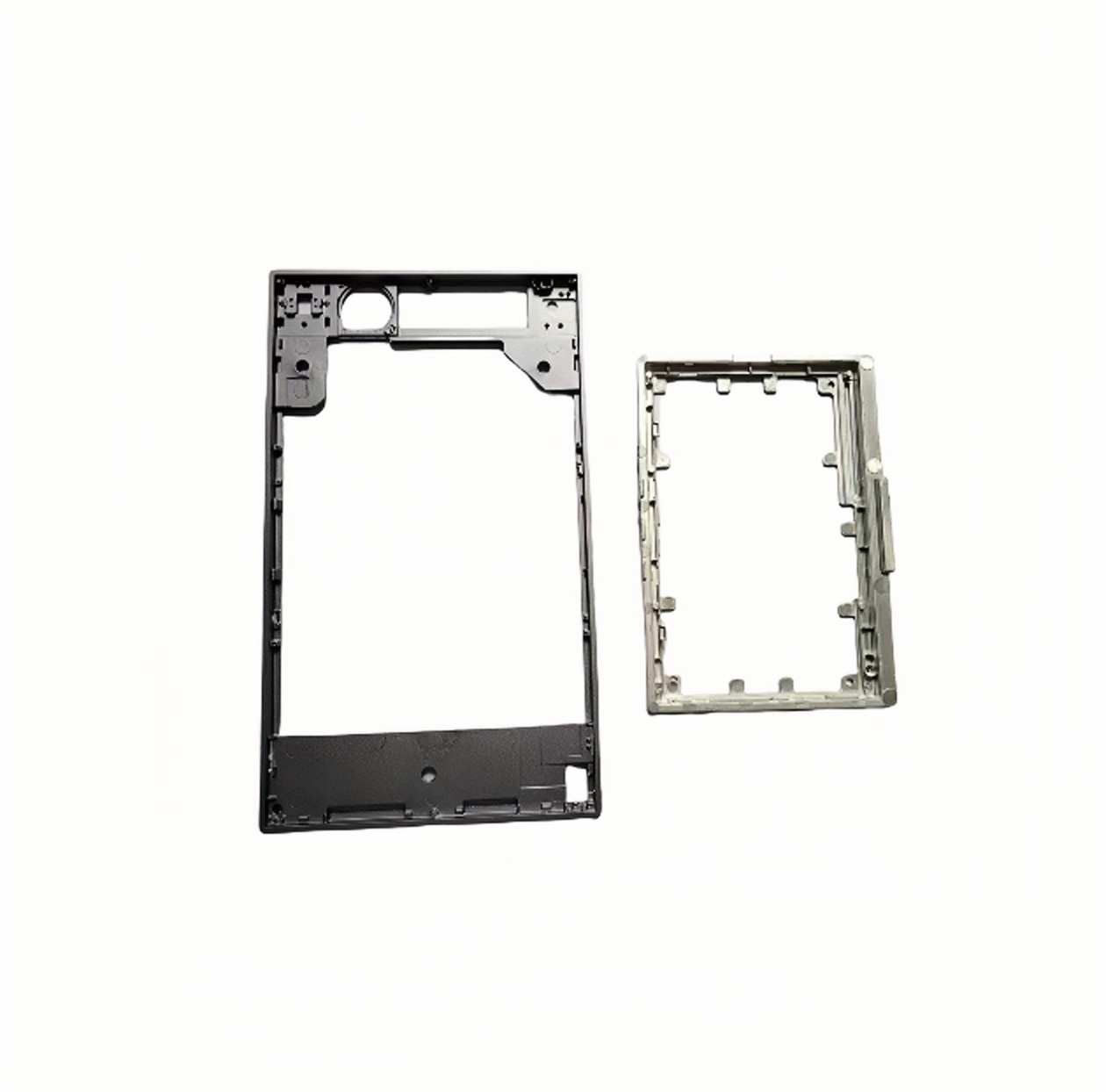
Precision is a hallmark of high-pressure metal injection. The process routinely achieves standard tolerances of ±0.002 inches per inch, surpassing virtually any other mass-production casting method. The extreme pressure forces the molten metal into every microscopic detail of the mold cavity, ensuring high fidelity to the original CAD model. This dimensional accuracy allows engineers to design complex mating parts with confidence, knowing that the structural integrity and fit will remain consistent across tens of thousands of production cycles.
The ability to cast complex geometries and thin walls drastically changes how engineers approach product design. Instead of designing multi-part assemblies that require welding, riveting, or fastening, teams can consolidate these features into single Aluminum Die Casting Parts. The process comfortably achieves wall thicknesses as low as 0.040 inches (1mm) while maintaining structural rigidity. This capability is particularly valuable in industries where space constraints and weight reduction are critical, as it eliminates the bulk and failure points associated with mechanical fasteners.
Out of the mold, the surface finish is exceptionally smooth and largely blemish-free. Unlike sand casting, which leaves a rough, granular texture requiring extensive grinding, high-pressure injection against polished steel yields a part ready for many end-use applications. This inherent surface quality minimizes the need for costly and time-consuming cosmetic post-processing. When specific aesthetic or protective coatings are required, the smooth baseline surface ensures excellent adhesion and uniform appearance.
Material properties further elevate the utility of these components. Common alloys like A380, A360, and A383 offer an outstanding strength-to-weight ratio. They are inherently lightweight yet robust enough to handle significant mechanical loads. Additionally, these alloys provide excellent thermal conductivity, natural corrosion resistance, and inherent EMI/RFI shielding. These characteristics make them indispensable in automotive applications, where reducing vehicle weight is paramount, and in electronics enclosures, where heat dissipation and signal interference protection are mandatory.
Alloy Grade | Primary Characteristics | Common Applications |
|---|---|---|
A380 | Excellent balance of castability and mechanical strength. | Engine brackets, electronic housings, power tools. |
A360 | Superior corrosion resistance and pressure tightness. | Marine components, fluid pump housings. |
A383 | Better resistance to hot cracking, easier to cast complex shapes. | Intricate automotive components, thin-walled enclosures. |
A common misconception in manufacturing is that metal casting yields completely finished parts directly from the mold. In reality, the process is best defined as near-net-shape. While the bulk geometry, internal cavities, and exterior profiles are formed with high precision, certain functional requirements exceed the capabilities of any casting method. Recognizing the distinction between net-shape and near-net-shape is crucial for accurate production planning and cost estimation.
Secondary CNC machining becomes mandatory when specific features require tolerances tighter than casting can provide. Tapped threads, for example, cannot be cast directly and must be drilled and tapped post-ejection. Ultra-precise mating surfaces, such as those required for fluid seals or engine blocks, require a quick facing operation to ensure perfect flatness. Similarly, undercut features that would trap the part in the mold, or bearing fits requiring extreme concentricity, necessitate secondary subtractive operations. The goal is to cast 95% of the part and machine only the critical 5%.
Surface readiness is another factor in post-processing. While the out-of-the-mold finish is smooth, many applications require additional surface treatments for enhanced durability or aesthetics. The natural surface accepts various finishes readily. Powder coating provides a durable, colored exterior suitable for consumer goods and industrial equipment. Anodizing enhances corrosion resistance and surface hardness, though the high silicon content in some casting alloys can affect the cosmetic appearance of the anodized layer. Chromate conversion coatings are frequently applied to improve paint adhesion and provide a base layer of corrosion protection.
Drilling and tapping for threaded fasteners.
Precision milling for O-ring grooves and fluid seals.
Boring operations for tight-tolerance bearing journals.
Vibratory deburring to remove sharp edges along the parting line.
When selecting a manufacturing process, engineers must weigh the specific demands of their project against the capabilities of various methods. Comparing high-pressure casting to CNC machining highlights a stark contrast in scalability and material usage. CNC machining is subtractive, carving a part from a solid billet, which results in significant material waste. It is highly flexible and ideal for prototyping or low-volume runs where tooling costs cannot be justified. Conversely, casting is an additive-style process regarding material efficiency; molten metal is placed exactly where needed. It dominates in mass production scenarios where the speed of output and minimal material waste outweigh the initial tooling investment.
Comparing high-pressure injection to sand casting and investment casting reveals distinct advantages in cycle times and surface quality. Sand casting is excellent for massive, heavy components and low-volume production since tooling is inexpensive, but it suffers from slow cycle times, poor dimensional accuracy, and rough surface finishes. Investment casting offers excellent precision and can handle ferrous metals, but the multi-step process is labor-intensive and slow. High-pressure injection provides superior production speed, unmatched surface smoothness, and consistent tolerances, making it the clear choice for high-volume, lightweight metal parts.
The choice between metal casting and plastic injection molding often comes down to mechanical and thermal requirements. Both processes utilize similar high-pressure injection principles and require significant tooling investments. However, metal parts offer vastly superior thermal resistance, allowing them to function in high-temperature environments where plastics would melt or deform. Metal also provides greater mechanical rigidity, impact resistance, and a premium perceived product quality. Plastic injection molding is preferable when extreme weight reduction, electrical insulation, or very low part costs are the primary drivers, provided the mechanical demands are low.
Despite its advantages, high-pressure metal casting carries inherent implementation risks that must be managed through careful engineering. The most prominent risk is gas entrapment and shrinkage porosity. Because the molten metal is injected at high velocities, air can become trapped within the mold cavity, forming microscopic voids in the solidified part. Shrinkage porosity occurs as the metal cools and contracts. Mitigation strategies include vacuum-assisted casting to evacuate air before injection, meticulous gating and runner design to control metal flow, and the strategic placement of overflow wells to capture turbulent, air-filled metal outside the main part geometry.
Designing for this process requires navigating counter-intuitive constraints. A solid, thick block of metal might seem simple to manufacture, but in casting, thick cross-sections cool slowly, leading to severe internal porosity and surface sink marks. Conversely, complex structures utilizing thin walls supported by internal ribs are much easier to cast. They cool rapidly and uniformly, resulting in stronger, defect-free parts. Strict adherence to DFM rules is mandatory. Engineers must maintain uniform wall thickness throughout the part, incorporate generous draft angles to allow easy ejection from the mold, and apply proper radii to all internal and external corners to prevent stress concentrations and promote smooth metal flow.
Tooling lead times present a significant timeline risk. Creating, hardening, and validating a complex steel mold typically takes 4 to 12 weeks. Once the tool is cut, modifications are exceptionally difficult, time-consuming, and expensive. Adding material to a mold requires welding and re-machining, which can compromise tool integrity. Removing material from the mold is easier but still causes delays. This rigid timeline underscores the absolute necessity of rigorous prototyping. Engineering teams must validate their designs thoroughly using 3D printing or CNC machining before releasing the final CAD files for tooling production.
Maintain uniform wall thickness to prevent uneven cooling and sink marks.
Apply a minimum draft angle of 1 to 2 degrees on all vertical walls.
Use generous fillets and radii on internal corners to reduce stress concentrations.
Avoid massive solid volumes; core them out and use ribs for structural support.
High-pressure aluminum injection stands as the optimal manufacturing choice for mass production when designs demand complex, lightweight metal components and the production volume justifies the initial tooling investment. It bridges the gap between the structural integrity of metal and the high-speed output typically associated with plastics, offering a highly efficient path to scale production.
Finalize your CAD models, ensuring strict adherence to uniform wall thickness and draft angle requirements.
Conduct a comprehensive Design for Manufacturability (DFM) review with a specialized manufacturing partner to identify porosity risks.
Request an itemized RFQ that clearly separates the upfront tooling costs from the ongoing piece-price.
Produce CNC machined prototypes to validate form, fit, and function before authorizing the cutting of steel molds.
A: The process typically becomes economically viable at production volumes between 5,000 and 10,000 units. Below this threshold, the high upfront cost of manufacturing the hardened steel mold outweighs the savings. At higher volumes, the tooling cost is amortized across thousands of parts, resulting in an exceptionally low per-unit cost.
A: Welding standard cast parts is highly challenging due to internal gas porosity. The extreme heat of welding causes trapped gases to expand, leading to blowholes and weak joints. If welding is mandatory, specific low-porosity processes, such as vacuum-assisted casting, must be used to minimize internal voids.
A: The standard lead time ranges from 4 to 12 weeks. This timeframe includes the final mold design, CNC machining of the hardened steel blocks, heat treatment, polishing, and the production of the first article inspection (FAI) samples to verify dimensional accuracy.
A: Draft angles are slight tapers applied to the vertical walls of the part design. They are essential because the metal shrinks slightly as it cools, gripping the mold core. Draft angles allow the part to release smoothly during ejection, preventing galling, surface damage, and excessive wear on the tooling.
A: CNC machined parts cut from solid billet aluminum generally possess superior mechanical strength and structural uniformity. However, cast alloys provide more than sufficient strength for most structural applications. Casting offers a highly efficient strength-to-weight ratio at a fraction of the cost for high-volume production.
A: A380 is the most widely used alloy in the industry. It offers an optimal balance of excellent castability, strong mechanical properties, good thermal conductivity, and dimensional stability, making it highly versatile for a broad range of automotive, electronic, and industrial applications.


