Views: 0 Author: Site Editor Publish Time: 2025-07-25 Origin: Site
When it comes to securing doors in both commercial and residential buildings, various access control systems are used. Among these, two popular types are electric locks and maglocks. Understanding the differences between electric locks and maglocks is crucial for choosing the right system for a specific application. This article delves into the details of each system, compares their advantages, and explains the factors that should influence the choice between the two.
An electric lock, often referred to as an electrically operated lock or electric strike, is a type of locking mechanism that relies on an electrical signal to control its locking and unlocking functions. These locks are typically used in access control systems where security and remote access are required.
Electric locks come in various forms, but they all work on the same basic principle. When power is supplied to the lock, it either holds the bolt in place or releases it, allowing the door to open. Electric locks are commonly used with systems like keycards, biometric scanners, and remote control mechanisms.
There are several types of electric locks, including:
Electric Strikes: These replace traditional mechanical strikes and are often used in conjunction with deadbolt locks. They release the bolt when an electrical signal is received, allowing the door to open.
Electromagnetic Locks: These locks use an electromagnet and an armature plate. When powered, the electromagnet holds the door shut, and when the power is turned off, the door can be opened.
Solenoid Locks: These use a solenoid (an electromechanical coil) to move a bolt and either lock or unlock the door.
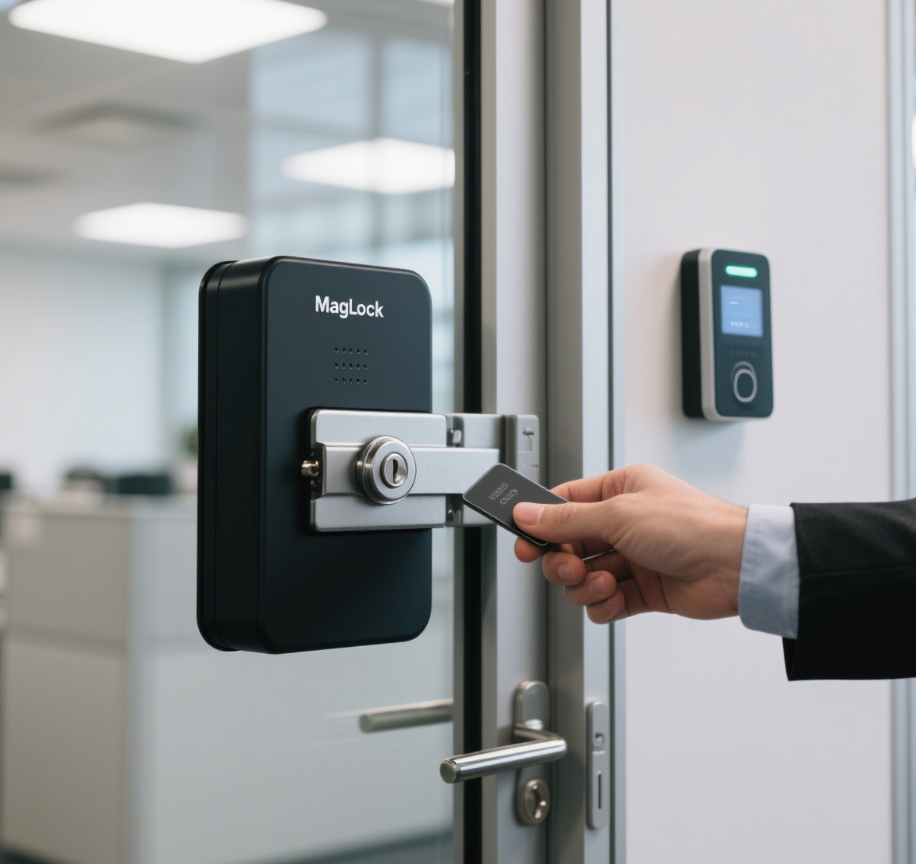
A maglock (short for "magnetic lock") is a specific type of electric lock that uses an electromagnetic force to secure a door. The basic working principle behind maglocks is simple: an electromagnet is mounted on the door frame, and a corresponding armature plate is fixed to the door. When the electromagnet is powered, it creates a strong magnetic field that attracts the armature plate, keeping the door locked.
Maglocks are one of the most common types of electric locks used in access control systems, especially in commercial and institutional settings. They offer high security and are relatively easy to install.
The functioning of a maglock is based on the principle of electromagnetism. When electricity flows through the electromagnet, it generates a magnetic field. This magnetic field attracts the armature plate, creating a secure bond between the door and the frame. When the electricity is cut off, the magnet loses its magnetic force, and the door can be opened.
Now that we have an understanding of both electric locks and maglocks, let's compare their key features, advantages, and drawbacks.
Electric Lock: An electric lock can refer to various types of locks, including electric strikes, solenoid locks, and electromagnetic locks. Each of these types works differently, but they all rely on an electric signal to function.
Maglock: A maglock specifically relies on an electromagnetic force to hold the door shut. It has fewer moving parts than many other electric locks, which often makes it simpler and more reliable in certain situations.
Electric Lock: The security level of electric locks can vary depending on the type of lock. For instance, electromagnetic locks are generally considered more secure because they provide a strong holding force. On the other hand, electric strikes might offer less security, especially if the lock is not installed correctly.
Maglock: Maglocks are known for their robust security. The strength of the magnetic bond between the electromagnet and the armature plate is quite strong, providing a secure lock. Maglocks are harder to bypass since they do not rely on mechanical components that could be manipulated.
Electric Lock: The reliability of electric locks can depend on the type and installation. For example, electric strikes are very reliable in controlled environments, but they can become problematic if misaligned. Additionally, mechanical components in solenoid locks may wear out over time.
Maglock: Maglocks tend to be highly reliable because they have fewer moving parts. They also work well in extreme environments where other types of locks might fail due to wear and tear. The absence of physical components means there is less chance of mechanical failure.
Electric Lock: In the case of power failure, electric locks may fail to operate properly, as most electric locks require continuous power to remain engaged. However, electric locks can be equipped with backup batteries to ensure functionality during power outages.
Maglock: Maglocks, like electric locks, rely on electrical power to function. However, when power is lost, maglocks release the door, making them less secure during power failures. This is an important consideration when using maglocks in critical security environments. To address this, maglocks are often equipped with fail-safe mechanisms to ensure the door opens when power is lost.
Electric Lock: Electric locks can be more complicated to install because they may require additional components, such as a strike plate or a solenoid, depending on the type of electric lock. Maintenance can also be more involved, as components such as electric strikes can become misaligned.
Maglock: Maglocks are relatively easier to install, as they generally require just an electromagnet and an armature plate. There are fewer moving parts, which reduces the maintenance requirements. Over time, however, the electromagnet may lose some of its magnetic strength, especially in extreme conditions.
Electric Lock: The cost of electric locks varies depending on the type. Electromagnetic locks are typically more expensive than electric strikes or solenoid locks. Additionally, the cost of installation can also add to the expense, especially if the system requires additional components.
Maglock: Maglocks are typically more affordable, especially when considering the simplicity of their design. They offer good value for the level of security they provide, making them popular in commercial settings where cost-effectiveness is a key consideration.
Electric Lock: Electric locks are versatile and can be used in a variety of settings, including residential, commercial, and industrial applications. Their suitability depends on the specific needs of the building and security system.
Maglock: Maglocks are typically used in commercial and industrial settings, particularly in high-security areas. They are often found in access control systems where rapid access and high security are required.
Versatility: Electric locks can be used in various applications, from residential to commercial settings.
Multiple Options: There are different types of electric locks, each with unique advantages, such as electric strikes, solenoid locks, and electromagnetic locks.
Customizable Security: Depending on the type of electric lock, users can select a system that matches their security needs.
Cost: Some types of electric locks, such as electromagnetic locks, can be expensive.
Complexity: Electric locks may require more installation work and maintenance, especially if the system involves additional components.
Simplicity: Maglocks have fewer moving parts, making them easy to install and maintain.
Reliability: The lack of mechanical components means maglocks tend to be more durable and reliable.
Cost-Effective: Maglocks are often more affordable than other types of electric locks, offering good value for the level of security they provide.
Vulnerability to Power Loss: Like other electric locks, maglocks rely on electrical power to function, and they can be compromised during power outages.
Limited Use Cases: Maglocks are typically used in commercial and industrial settings, but may not be suitable for residential applications due to security concerns during power loss.
When deciding between electric locks and maglocks, several factors should be taken into consideration:
Security Requirements: If high-security is a primary concern, maglocks are often the better option due to their strong magnetic bond.
Budget: Maglocks are usually more cost-effective, so if budget is a concern, they may be the better choice.
Power Backup: If power reliability is a key factor, electric locks with backup power systems may be preferable.
Application: Consider the specific needs of the building or system. Maglocks are often ideal for commercial and industrial applications, while electric locks may be better suited for residential and mixed-use environments.
Both electric locks and maglocks offer unique advantages, and the right choice depends on the specific needs of the installation. Maglocks are a strong choice for high-security environments where simplicity and cost-effectiveness are important. Electric locks, on the other hand, offer more versatility and can be customized to meet a wide range of security needs. Whether you choose a maglock or an electric lock, it’s important to carefully assess your security requirements and ensure the system meets the needs of your building.


