Maglocks, or electromagnetic locks, have become an essential part of modern access control systems, providing a secure and efficient way to manage entry points. These devices use electromagnetic force to secure doors, providing an automatic locking mechanism without the need for traditional mechanical hardware like deadbolts or latches. Their reliable function and ease of use have made them popular in various security settings, from residential buildings to commercial establishments.
In this article, we will explore how maglocks work, their components, types, applications, and advantages. Additionally, we will delve into how maglocks are integrated into door systems and why they are preferred for access control.
A maglock, short for magnetic lock, is a type of locking mechanism that uses electromagnets to secure a door. It operates by using an electromagnetic field generated by a coil to create a force that holds a metal plate, usually made of steel, in place. When the power supply to the electromagnet is turned off, the lock is released, allowing the door to open.
Maglocks are primarily used for door maglock systems, where they are installed in conjunction with a metal plate (also known as an armature plate) on the door frame. These systems are favored in commercial and high-security environments due to their simplicity and effectiveness.
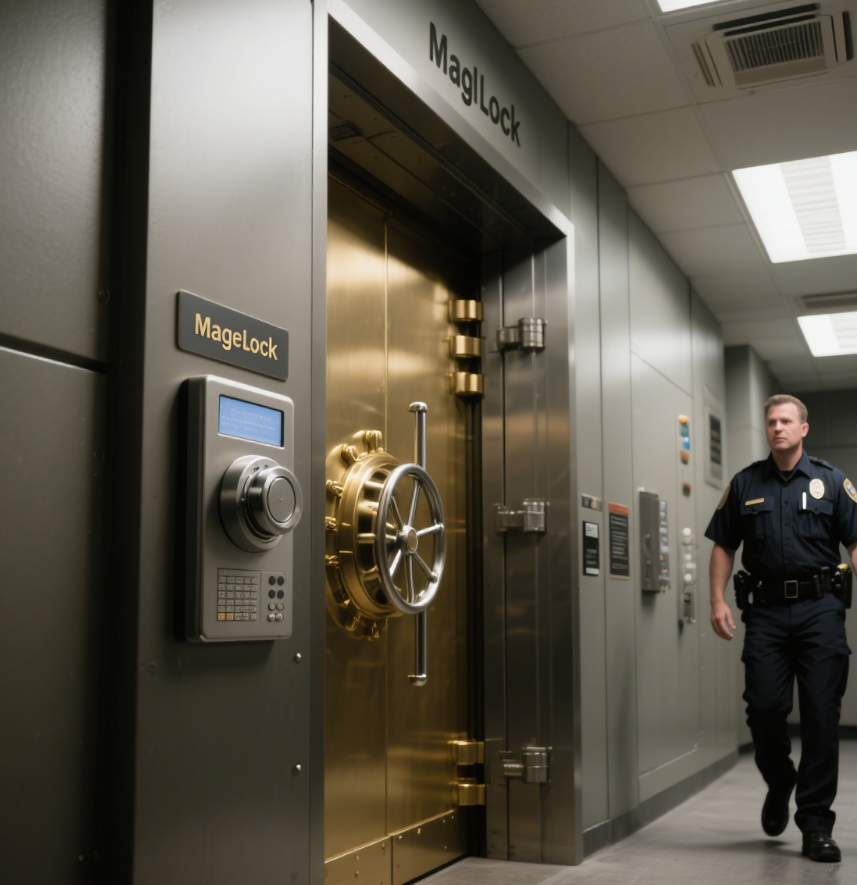
Maglocks rely on the basic principles of electromagnetism to function. When an electric current passes through a coil of wire, it creates a magnetic field around the coil. This magnetic field attracts ferromagnetic materials, such as steel, and can be used to secure doors.
The electromagnet within a maglock door system is attached to the door frame, while the armature plate is mounted on the door itself. When the maglock is energized, the magnetic force pulls the armature plate toward the electromagnet, holding the door securely shut. The strength of the magnetic force is directly related to the amount of current flowing through the coil and the characteristics of the armature plate.
For a maglock door to function, a steady power supply is essential. Maglocks typically require DC voltage (direct current) to operate. The most common voltage levels are 12V or 24V, depending on the design of the lock. The power is supplied through an electric control system that can be integrated with a variety of access control methods, such as keypads, card readers, or biometric systems.
Maglocks are available in two main configurations: fail-safe and fail-secure. These terms describe the behavior of the maglock during a power failure.
Fail-Safe Maglocks: These locks are designed to release when power is cut off. This ensures that in the event of a power failure, the door will automatically open, allowing people to exit safely. Fail-safe locks are commonly used in emergency exit doors and are often found in public buildings where safety is a priority.
Fail-Secure Maglocks: In contrast, fail-secure maglocks remain locked when power is lost. This ensures that unauthorized individuals cannot gain access during a power outage. Fail-secure maglocks are ideal for high-security applications where maintaining access control is critical.
A maglock door system consists of several key components that work together to provide reliable security:
Electromagnet: The electromagnet is the central component of a maglock. It is usually installed in the door frame and connected to the power supply. When powered, the electromagnet generates a magnetic field that holds the armature plate in place.
Armature Plate: The armature plate is a metal plate attached to the door. When the maglock is activated, the electromagnetic force pulls the armature plate toward the electromagnet, securing the door. The armature plate is typically made of steel or another ferromagnetic material to enhance the strength of the magnetic bond.
Power Supply: Maglocks require a constant power supply to function. The power is typically provided by a 12V or 24V DC power source, which is connected to the electromagnet.
Control System: The control system is responsible for activating or deactivating the maglock. This can include a variety of access control systems, such as keypads, swipe card readers, or biometric scanners. The control system sends a signal to the maglock to either engage or disengage the lock, depending on whether access is granted or denied.
Lock Housing: The lock housing encloses the electromagnet and other components, providing protection from external elements and ensuring the proper operation of the maglock. The housing is typically made of durable materials, such as aluminum or stainless steel.
Mounting Bracket: The mounting bracket is used to securely attach the electromagnet to the door frame. It ensures that the electromagnet is positioned correctly in relation to the armature plate on the door.
The installation of maglocks involves attaching the electromagnet to the door frame and the armature plate to the door. Here’s a step-by-step overview of the installation process:
Preparing the Door Frame and Door: The door frame and door must be properly prepared to accommodate the maglock system. This may involve drilling holes for the electromagnet, armature plate, and mounting bracket.
Mounting the Electromagnet: The electromagnet is mounted securely to the door frame using the mounting bracket. The electromagnet should be positioned so that it aligns with the armature plate on the door when the door is closed.
Attaching the Armature Plate: The armature plate is attached to the door, usually using screws. The plate must be positioned to align with the electromagnet when the door is closed.
Connecting the Power Supply: The power supply is connected to the electromagnet. This is typically done by wiring the electromagnet to a 12V or 24V DC power source. The power supply should be connected to the control system, which will manage the activation and deactivation of the maglock.
Testing the System: Once the maglock is installed, the system should be tested to ensure it operates correctly. This includes verifying that the door is securely locked when the maglock is energized and that the door opens when the maglock is de-energized.
Maglocks are used in a variety of applications, both in residential and commercial settings. Some common applications include:
Commercial Buildings: Maglocks are widely used in commercial buildings for controlling access to secure areas. They are often found on maglock doors in office buildings, hospitals, and government facilities.
Emergency Exit Doors: Fail-safe maglocks are often used on emergency exit doors. In the event of a power failure or emergency situation, these locks automatically release, allowing people to exit safely.
High-Security Areas: Fail-secure maglocks are used in high-security areas where it is crucial to maintain control over access. These locks are typically found in data centers, server rooms, and areas that require restricted entry.
Residential Use: In residential settings, door maglocks are used for securing homes, apartments, and gated communities. They can be integrated with home automation systems to provide convenient and secure access control.
Public Transportation: Maglocks are used in public transportation systems, such as trains and buses, to control access to certain areas, such as control rooms or storage compartments.
Retail and Hospitality: In retail and hospitality settings, maglocks are used to secure doors to storage rooms, back offices, or restricted areas. They can be integrated with card readers or biometric systems for added security.
Maglocks offer several advantages over traditional mechanical locks:
Easy Installation: Maglocks are easier to install compared to mechanical locks. There is no need for complex hardware, such as deadbolts or latches. The lock simply requires a power supply and proper alignment of the electromagnet and armature plate.
High Security: Maglocks provide a high level of security due to the strength of the electromagnetic force holding the door shut. It is nearly impossible to force open a maglock door without disrupting the power supply or damaging the lock.
Durability: Maglocks are highly durable and require minimal maintenance. There are fewer moving parts compared to mechanical locks, reducing the risk of wear and tear.
Convenience: Maglocks can be integrated with various access control systems, such as keypads, card readers, or biometric scanners, providing convenient and secure access. This makes them ideal for environments where controlled access is necessary.
Remote Control: Maglocks can be remotely controlled, allowing access to be granted or denied from a central location. This is especially useful in large buildings or multi-tenant properties.
Fail-Safe Operation: The fail-safe maglock design ensures that in the event of a power failure, the door will automatically open, allowing safe egress. This is crucial for ensuring the safety of occupants in emergency situations.
Maglocks have revolutionized the way we approach access control, providing a reliable, secure, and convenient solution for locking doors. Their ability to be integrated into sophisticated access control systems, combined with their simple operation and minimal maintenance requirements, makes them an ideal choice for securing various environments. Whether used in commercial buildings, residential homes, or high-security areas, maglock doors provide a high level of security and convenience that is hard to match with traditional locking mechanisms.
In the ever-evolving field of security, maglocks continue to play a pivotal role in safeguarding access points and ensuring safety. As technology advances, we can expect even more sophisticated and efficient maglock systems to emerge, further enhancing security in the years to come.


